
Learn how Amazon truck driver jobs in the U.S. typically work, including CDL vs non-CDL roles, part-time options, entry-level paths, and key factors to review before applying.
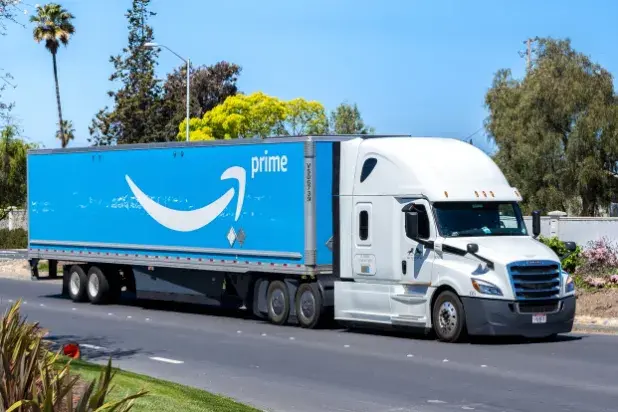
Interest in trucking and delivery work remains high in the United States, especially among job seekers looking for flexible schedules, local routes, entry paths into transportation, or more structured commercial driving careers. That is one reason search terms such as Part Time Truck Driving Jobs, CDL Truck Driving Jobs, Entry Level Truck Driving Jobs, Truck Driving Jobs no Experience no CDL, Part Time Truck Driving Jobs Near Me, and even variants like Truck Driving job near Near Me continue to appear so often in job-related searches.
For people researching Amazon Truck Drivers hiring, it is useful to understand that this phrase can cover more than one kind of opportunity. In practice, some roles are tied to local package delivery, while others relate to heavier commercial trucking through programs connected to Amazon’s broader transportation network. Amazon’s official transportation and logistics pages describe a large network spanning shipping, sortation, delivery stations, returns, and partner-based transportation operations. Amazon also has a separate Amazon Freight Partner job platform focused on Class A truck driver opportunities.
Because the transportation field includes both non-CDL and CDL pathways, job seekers should compare openings carefully rather than assuming all “truck driver” roles follow the same rules. Some local delivery roles may focus on standard driver’s-license qualifications and on-the-job training, while heavier commercial roles typically require a CDL and may involve formal entry-level training standards set by federal regulators.
This guide explains how these job categories generally work, what requirements often matter most, and what to review before making decisions.
Understanding What “Amazon Truck Drivers Hiring” Can Mean
When people search for Amazon truck driving work, they may actually be looking at at least two broad categories.
The first category is local or last-mile delivery work. The U.S. Bureau of Labor Statistics describes delivery truck drivers as workers who pick up, transport, and drop off packages and small shipments within a local region or urban area, typically using vehicles under 26,001 pounds. These jobs commonly involve loading and unloading, following routes, handling delivery confirmation, and working in time-sensitive conditions.
The second category is heavier freight transportation. BLS explains that heavy and tractor-trailer truck drivers transport goods from one location to another, often over intercity routes and across multiple states, usually operating trucks over 26,000 pounds. Amazon’s Freight Partner site specifically highlights Class A truck driver opportunities, which places those jobs much closer to the commercial freight side of trucking than to ordinary local parcel delivery.
This distinction matters because it affects licensing, training, work schedules, pay structures, physical demands, and how “entry level” should be interpreted.
A Simple Way to Compare Common Job Paths
| Job path | Typical vehicle/work pattern | License expectation | Training pattern | Common search intent |
|---|---|---|---|---|
| Local package or delivery route work | Local routes, repeated stops, package handling | Standard state driver’s license in many cases | Often short on-the-job training | Part Time Truck Driving Jobs Near Me, Truck Driving Jobs no Experience no CDL |
| Light truck delivery work | Local or regional delivery of smaller shipments | Standard driver’s license with clean record | Usually employer training | Entry Level Truck Driving Jobs |
| Heavy or tractor-trailer freight work | Regional or long-haul freight movement | CDL required for covered commercial vehicles | Formal CDL path plus ELDT for many first-time applicants | CDL Truck Driving Jobs |
The table above reflects the basic differences described by BLS and FMCSA, and it helps explain why two job ads that both mention “driver” can actually belong to very different parts of the market.
What Entry-Level Usually Means in This Market
Many job seekers interpret Entry Level Truck Driving Jobs as roles open to people with no commercial background. That can be true, but the details depend on the type of driving involved.
For local delivery truck drivers and driver/sales workers, BLS says workers typically need a high school diploma or equivalent, though some opportunities exist without that credential, and new workers often receive one month or less of on-the-job training. They also need a valid state driver’s license and a clean driving record.
For heavier tractor-trailer jobs, BLS states that drivers usually have a high school diploma, attend a professional truck driving school, and must have a commercial driver’s license. FMCSA also states that drivers must obtain and hold a CDL when operating vehicles that meet the covered commercial classifications, and the agency’s Entry-Level Driver Training rules set baseline training requirements for many first-time Class A or Class B CDL applicants.
So, “entry level” does not always mean “no credentials needed.” In some postings, it may mean entry level within the commercial trucking field after required licensing and training have been completed.
What to Know About “No Experience” and “No CDL” Searches
Searches such as Truck Driving Jobs no Experience no CDL are usually aimed at people seeking the fastest starting point. In practical terms, those searches are more likely to align with local delivery or lighter vehicle roles than with tractor-trailer freight positions.
BLS says delivery truck drivers typically enter the field with employer-provided training and a state driver’s license, while heavy truck drivers must hold a CDL for those larger commercial vehicles. FMCSA’s CDL guidance reinforces that commercial-motor-vehicle drivers in covered categories must obtain and maintain the proper CDL.
That means job seekers should read posting language carefully. A listing may be described informally as a truck driving job, but the actual requirements could be closer to package delivery, step-van work, box-truck work, or full commercial tractor-trailer driving. The title alone does not tell the whole story.
Part-Time and Near-Me Searches
Searches for Part Time Truck Driving Jobs and Part Time Truck Driving Jobs Near Me often come from people prioritizing flexibility, local travel, or supplemental income. In general, part-time opportunities are more commonly associated with local delivery-style operations than with long-haul freight networks, although availability varies by market and employer structure.
The BLS profile for delivery truck drivers helps explain why local demand exists: light truck drivers held about 1.1 million jobs in 2024, and the occupation is projected to grow 8 percent from 2024 to 2034, with about 171,400 openings each year on average. That is faster than the average for all occupations.
By contrast, heavy and tractor-trailer truck driving remains a very large occupation with about 237,600 projected openings per year on average from 2024 to 2034, but these roles more often involve heavier regulatory requirements and may be less likely to match a casual “near me, part-time, no CDL” search pattern.
Pay and Career Path Considerations
Job seekers often compare trucking roles based on how quickly they can start versus how much they may earn over time.
According to BLS, the median annual wage in May 2024 was $44,140 for light truck drivers and $57,440 for heavy and tractor-trailer truck drivers. Those median figures do not guarantee what an individual posting will pay, but they are useful for understanding the broader structure of the labor market. In simple terms, heavier regulated roles often come with a higher median wage, while lighter local-delivery roles may offer a lower barrier to entry.
This is why some workers start by exploring entry-level or non-CDL delivery work and later decide whether a CDL path is worth the extra training time, compliance burden, and responsibility.
What to Check Before Responding to Any Posting
Before pursuing Amazon-related driving roles or similar opportunities, job seekers should review several practical points.
First, confirm whether the role is part of local package delivery, light truck delivery, or Class A freight transportation. Amazon’s official ecosystem includes transportation and logistics teams broadly, while Amazon Freight Partner focuses specifically on Class A driving opportunities.
Second, check the license requirement carefully. If the vehicle and duties fall under commercial motor vehicle rules, FMCSA requires a CDL. If it is a local delivery role, the posting may instead focus on a regular driver’s license, driving history, and route readiness.
Third, review schedule structure. Local route work may better fit people searching for Part Time Truck Driving Jobs Near Me, while CDL freight roles may involve longer time on the road, overnight schedules, or more rigid route planning.
Fourth, compare physical demands. BLS notes that local delivery work often includes lifting, carrying, walking, and dealing with congested traffic and tight delivery timelines. Heavy truck driving adds cargo securement, inspections, and hours-of-service compliance responsibilities.
Fifth, check whether “entry level” means employer training after hire or whether it means entry level after completing CDL school and ELDT requirements. That distinction can affect cost, time, and eligibility.
Conclusion
For U.S. job seekers researching Amazon Truck Drivers hiring, the most useful starting point is to separate local delivery work from CDL-based freight driving. Both are part of the wider transportation market, but they involve different vehicles, different training expectations, and different licensing rules. Official labor data shows ongoing demand in both light delivery driving and heavy truck driving, while federal guidance makes clear that commercial vehicle work often requires a CDL and, for many new applicants, entry-level driver training.
Searches such as Entry Level Truck Driving Jobs, Truck Driving Jobs no Experience no CDL, Part Time Truck Driving Jobs, and CDL Truck Driving Jobs may all point to different opportunities under the same broad “driver” label. Careful reading of the job type, license requirements, schedule, and physical demands can help applicants make more informed decisions and avoid mismatches between expectations and the actual role.